

Common IT Problems Cincinnati Businesses Face (And How to Fix Them)
Cincinnati is a thriving hub of business, home to six Fortune 500 companies, including Procter & Gamble, Kroger, Fifth Third Bank, and Western & Southern Financial.
While these giants corporations have dedicated IT teams to keep things running, small and mid-sized businesses don’t have that same luxury. And yet, the stakes are just as high. When their technology fails, productivity drops, data gets lost, and your bottom and reputation both take a hit.
Let’s dive into some of the most common IT problems Cincinnati businesses face and, more importantly, how you can fix them before they derail your operations.
1. Technology Failing to Provide Business Impact
Many companies approach IT as nothing more than a collection of “tools” rather than recognizing it as the strategic driver of growth it should be. As your business demands grow and evolve, new tools get added to your technology stack, and various systems get put in place to address immediate needs. The problem is, all this usually happens very reactively, without any cohesive vision guiding these decisions.
Over time, what you end up with is a patchwork approach that creates an increasingly fragmented tech environment. Without proper integration between systems or alignment with your actual day-to-day workflows, even the most well-intended tools can become frustrating obstacles that slow your team down.
When your employees find themselves constantly struggling with IT-related issues, productivity inevitably nosedives. Even worse, IT starts being viewed as nothing more than an unavoidable cost center.
How to fix it: Start by auditing your current systems and workflows. Work with an internal champion or an experienced IT partner to ensure your tools align with how your business actually operates. The right IT setup should make work simpler, not harder.
2. Difficulty Finding Information
Every organization today has absolutely overflowing amounts of data at their disposal, but here’s the catch: that data often isn’t easily accessible when you actually need it. As teams grow and evolve over time, data tends to get siloed between different business functions. What happens is that valuable information becomes increasingly obscured and difficult to locate, leaving your teams without access to the critical insights that can genuinely make or break important business outcomes.
If your employees are regularly wasting precious time digging through endless old email threads, navigating disconnected file storage systems, or searching through outdated shared drives, you’re certainly not alone in this struggle.
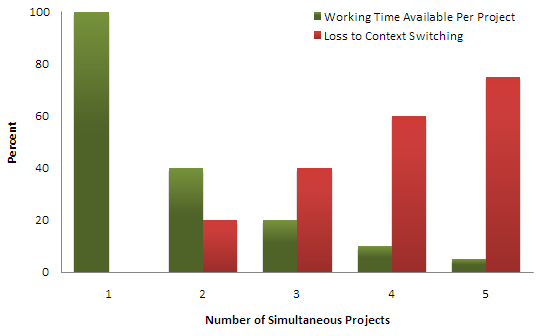
Image Courtesy of Coding Horror
How to fix it: A well-configured cloud solution is your best friend here. It centralizes your data while improving security and accessibility, especially for hybrid or remote teams. Invest in proper cloud migration and configuration as well so files are logically organized and easily searchable.
3. Poor Communication Tools
Even when data is centralized, the way teams communicate around that data is just as important.
But there’s another problem: communication sprawl. Simply put, there are now more tools, platforms, and avenues where communication happens than ever before. While this might seem like it would improve communication, it often creates the opposite effect. This complex web of different communication channels can make communication opaquer and significantly increase the likelihood of miscommunication.
In fact, communication breakdowns are among the biggest IT-related productivity killers. When teams rely on a mix of personal messaging apps, email, and outdated phone systems, important information slips through the cracks.
According to RingCentral’s report, more than two-thirds of workers say they waste up to 60 minutes each day just navigating between apps. This constant context-switching contributes to fragmented workflows, communication fatigue, and lost productivity
How to fix it:
Standardize communication by adopting an all-in-one collaboration platform such as Microsoft Teams, which combines messaging, video conferencing, and file sharing in a single interface. And, integrate these tools with cloud storage and project management platforms to create a centralized digital workspace. For remote or hybrid teams, implement mobile device management (MDM) to secure data access across devices.
4. Lack of Business-IT Alignment
One of the biggest frustrations for business owners is spending money on IT without seeing measurable business outcomes. Maybe you’ve invested in software your team barely uses or hardware that doesn’t match your workflows. It’s easy to see why this is frustrating.
There are two distinct aspects to consider here. First, there’s the challenge of tracking changes to determine how they’re improving workflows or saving time for your organization. Often, these benefits aren’t immediately visible or quantifiable, which is precisely why tracking and measurement become so critical to understanding your return on investment.
Second, there’s the fundamental issue of strategic alignment. When your IT investments aren’t properly aligned with your actual business needs and objectives, you end up wasting budget dollars and preventing your employees from getting access to the tools they need to be successful.
This misalignment often happens because IT decisions get made in isolation, without sufficient input from the people who will actually be using these systems day in and day out. The result is technology that looks good on paper but doesn’t deliver practical value in real-world applications.
How to fix it: Create a strategic IT roadmap that ties your technology investments to your business objectives. Ask questions like: What are our top priorities this quarter? What IT systems can directly support these goals? For instance, if your company aims to improve customer response times, it might be time to integrate a CRM tool with your communication platform.
5. Lack of a Cybersecurity Strategy
Despite growing awareness about cyber threats, there’s still a persistent and genuinely dangerous myth that continues to circulate among small and mid-sized businesses. Many business owners still believe that their companies are simply too small or too insignificant to be targeted by sophisticated cyberattacks.
Unfortunately, the reality couldn’t be farther from this assumption. In fact, 43% of cyberattacks target small and medium‑sized businesses, yet only 14% are prepared to defend themselves.
Here’s what cybercriminals actually understand very clearly: they often view SMBs as low-hanging fruit that represents easier targets than large corporations. They recognize that many small and mid-sized businesses lack comprehensive security protocols, don’t have dedicated IT security personnel on staff, and haven’t developed formal incident response plans to handle breaches when they occur.
With hackers deploying AI to launch newer attacks, more frequently, even a single phishing email, weak password, or unpatched software can result in a serious breach.
How to fix it: Cybersecurity doesn’t have to be complicated, but it must be proactive. The most effective cybersecurity strategies for Cincinnati businesses often begin with the basics. Implementing multi-factor authentication (MFA) on all accounts adds a crucial layer of protection against unauthorized access.
Employees should be regularly trained to recognize phishing attempts and social engineering tactics, which are common entry points for cyber threats. Additionally, deploying endpoint protection tools and maintaining robust firewalls helps.
6. Remote Work and Device Management Challenges
The landscape of work has been completely transformed over the past few years, and remote work has grown tremendously, fundamentally upending traditional business operations in ways we’re still learning to navigate.
The line between home and office has become increasingly blurred, personal and professional device use has become deeply intertwined, and as a result, IT challenges have multiplied significantly.
There is a plethora of new complexities that have to be addressed: employees might be accessing sensitive company data from their home Wi-Fi network, their local coffee shop, or even while traveling. Each of these scenarios presents different security challenges and potential vulnerabilities that need to be addressed proactively.
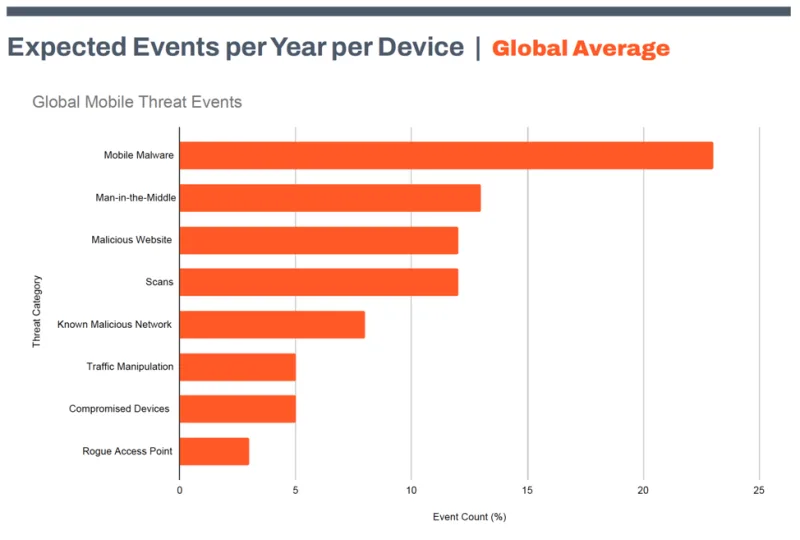
Image Courtesy of Zimperium 2022 Global Mobile Threat Report
How to fix it: Invest in a mobile device management (MDM) platform to secure employee devices without invading privacy. Provide company-approved tools for secure remote access and collaboration. Even simple steps, like requiring VPN connections for remote logins, can dramatically improve your security posture.
Cincinnati Businesses Rely on Astute Technology Management
At the end of the day, your IT problems won’t solve themselves. Every day you delay fixing fragmented systems, poor communication tools, and weak security is another day your competitors pull ahead.
The businesses thriving in Cincinnati‘s competitive market have one thing in common: their technology works for them, not against them. Want your business to achieve the same? Contact us any time above.