

Building Smarter: Why Data and IT Integration Matters for Construction Firms
The construction industry has not been in a huge hurry to adopt new technology, but the ground has shifted. After years of hesitation, construction leaders are finally recognizing that AI, cloud platforms, mobile devices, and analytics are no longer optional. Firms are now buying platforms and rolling out apps to capture some of that value.
But here is where most of them get stuck. They are thinking in terms of just IT, not data.
The software gets bought and the dashboards get built, but nobody is stepping back to ask how information actually moves through the business. And when the honest answer is through a dozen disconnected systems and a lot of spreadsheets, the return on all that investment can begin to look a lot smaller than expected.
The construction companies that get real value from their technology are the ones that stop thinking in terms of tools and start thinking in terms of systems. When your individual platforms work together and data flows accurately and smoothly, you get the output you were hoping for.
The potential is real. Capturing it just requires thinking about data as seriously as the tools that generate it.
3 Signs Your Construction Firm Is Having Data Issues
Data problems rarely announce themselves. Instead, they show up as small frustrations that most teams have simply accepted as the cost of doing business. Here are the patterns worth paying attention to.
1. Numbers that do not add up
When your data setup has two or three different values depending on which system you ask, you do not have a reporting problem. You have a data consistency problem. For example, project costs in your ERP do not match what is showing in your project management platform. And labor hours reported in the field differ from what payroll has processed. So every decision based on those numbers is shakier than it looks. It’s especially dangerous because this wrong data has a domino effect across the organization.
2. Workflows that feel choppy
When your teams spend too much time verifying data, reconciling reports, and asking colleagues to resend information that should already be accessible, that’s a sure sign that your firm is facing data issues. According to an FMI and Autodesk study, construction professionals spend roughly 13 hours per week just searching for information. That is more than half a day every week per employee, lost to friction that has nothing to do with the actual work.
3. Analytics that feel unreliable
Predictive analytics and forecasting are only as good as the data behind them. So when inputs are inconsistent or incomplete, the outputs are too. And the risk is not just that the insights are wrong. It is that teams stop trusting them, which sets everything back and makes the technology investment harder to justify to anyone looking at the budget.
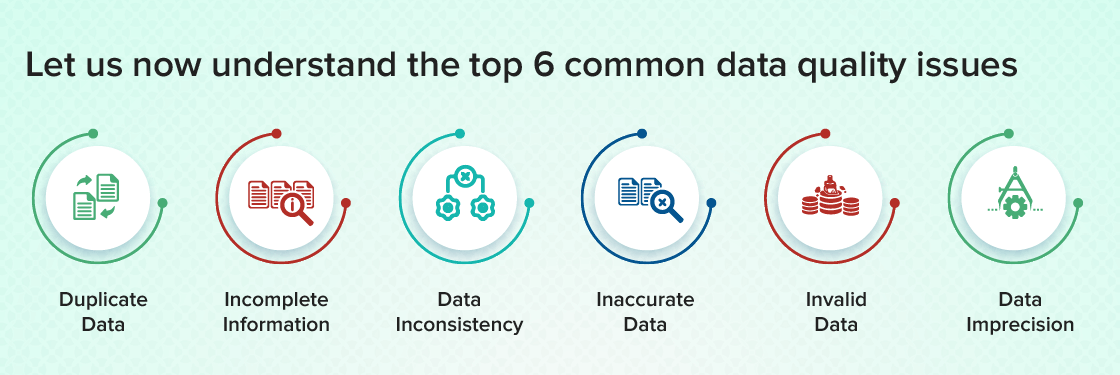
Image Courtesy of Amurta
In fact, FMI and Autodesk estimated that bad data cost the construction industry $1.84 trillion in 2020, with roughly 14% of all rework directly attributable to poor information. And according to AGC and Procore research, 76% of construction firms say they do not realize the full potential of their data. So the problem is not a lack of data. It is that the data is scattered, inconsistent, and hard to trust.
What Is a “Single Source of Truth”
The fix for most data problems is simple; having a “single source of truth.” It just means there’s one agreed-upon, authoritative place where a given piece of information lives.
So when someone asks about the status of a change order, the cost-to-completion on a project, or last month’s safety incidents, everyone looks at the same record and sees the same answer.
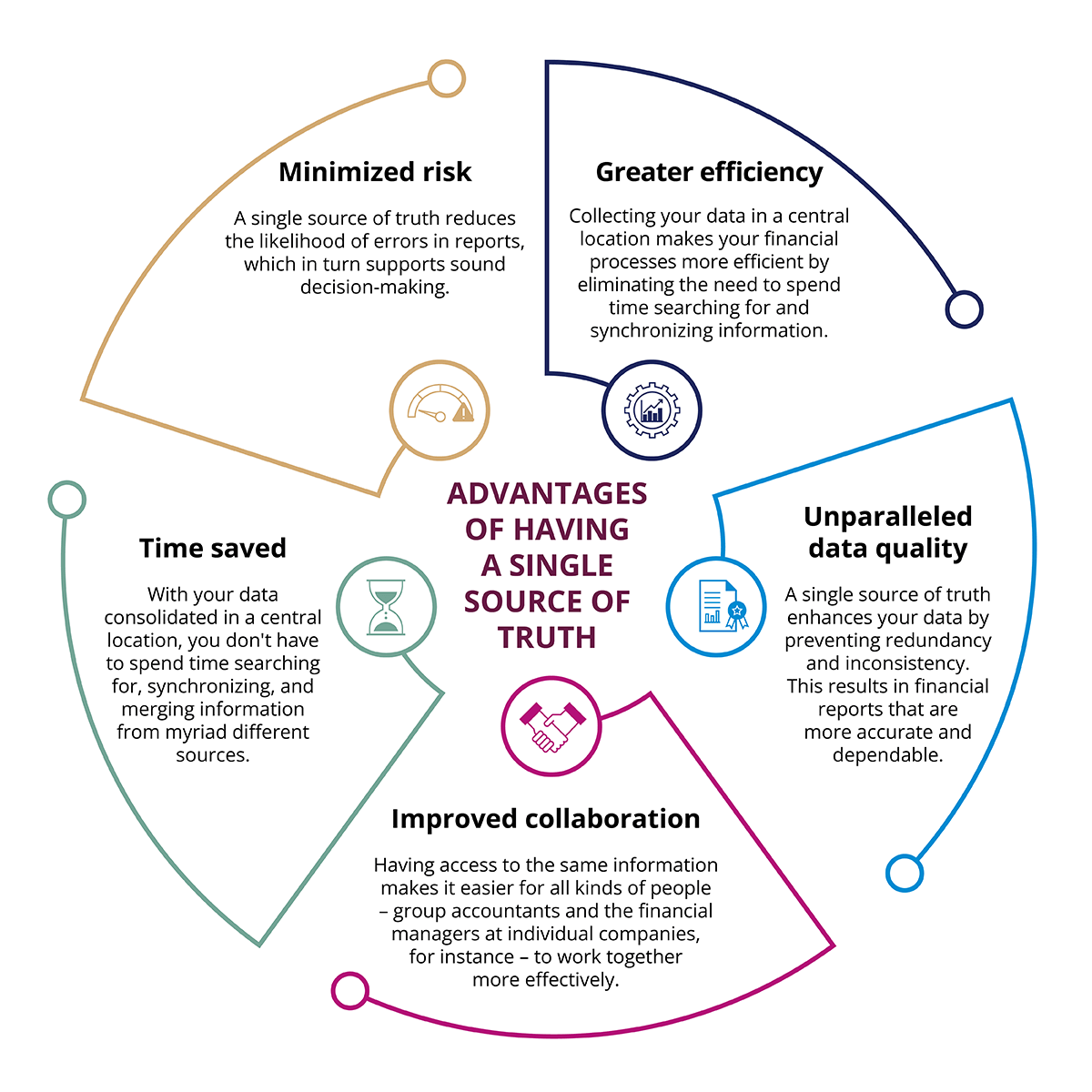
Image Courtesy of Lucanet
This means that every change is logged, every version is tracked, and every team member and everyone is looking at the same information. And major general contractors are already moving this direction. DPR Construction, for example, standardized on Autodesk Construction Cloud as the single source of truth across its projects.
The places where firms most often need this tend to be the same across the industry: project financials, schedules and milestones, RFIs and submittals, safety and quality records, and labor and equipment data. When these live in siloed systems that do not talk to each other and those gaps are where bad decisions get made.
Building That Single Source of Truth
Getting to a single source of truth is not about buying one more platform. It is about creating the underlying structure that lets your existing tools share information consistently. And that structure has four components worth understanding.
What Is a Data Warehouse?
A data warehouse is a centralized repository where data from multiple business systems is brought together and stored in a consistent format. But it is not where your day-to-day work happens. Your project managers still use applications like Procore or Autodesk. And your finance team still uses applications like Sage or QuickBooks.
Instead, the data warehouse sits behind all of that, pulling information from each system so that analytics and reporting have one clean place to draw from. Without it, each tool remains its own island, and getting a complete view of a project means manually stitching information together every time.
ARCO Construction, for instance, moved from a fragmented setup where Procore and Viewpoint data lived in their own silos to a centralized Microsoft Azure data warehouse. As a result, leadership got a unified view of project performance across the business, which was previously impossible without significant manual work.
Identify Your Data Sources
Before building anything, it is worth taking inventory of where your data actually lives. For most construction firms, the list looks something like this:
- Project management platforms such as Procore, Autodesk Construction Cloud, or Oracle Aconex
- ERP and accounting systems such as QuickBooks, Sage, or Viewpoint
- Scheduling tools such as Primavera P6 or Microsoft Project
- Field data from daily reports, timecards, safety apps, and equipment telemetry
- Document management systems that store drawings, contracts, and specifications
Each of these holds a piece of the operational picture. And the goal is not to replace them. It is to make sure they can all feed into a common structure so you can actually see the whole picture at once.
The ETL Process
ETL stands for extract, transform, load. And it is how data moves from your source systems into the warehouse. Extract pulls the raw data out. Transform cleans it up, standardizes formats, and reconciles things like naming conventions across systems. Load then places it into the warehouse in a structured form.
This might sound a little abstract but it’s a solid process that gives great payoff.
For example, one industrial construction firm working with Pipereply replaced its manual data workflows with an automated ETL pipeline and saved 30 hours per week and roughly $45,000 per year. ETL creates the foundation that makes everything else possible.
Data Governance and Ongoing Maintenance
A single source of truth is only useful if it stays accurate. And that requires governance, which in plain terms means deciding who owns what data, who can change it, how quality is monitored, and how access is controlled. Without those decisions, even the best-designed warehouse will drift back toward the same inconsistency problems it was meant to solve.
Ongoing maintenance matters for the same reason. Source systems change. New tools get added. And reporting needs evolve as the business grows. Therefore, a data warehouse is not a build-it-once project. It is infrastructure, and like any infrastructure on a construction site, it needs regular attention to keep performing.
The Path Forward
Construction firms that have invested in IT without thinking about data are discovering what most industries learned years ago: tools do not deliver value on their own. It is the integration between them, and the consistency of the information flowing through them, that turns technology into a real advantage.
And the good news is that this does not require starting over. Your existing platforms can absolutely be the foundation of a smarter data strategy. What it requires is a shift in thinking, from “what software should we buy next” to “how do we make what we already have work together.”
The foundation has to be solid before anything else can be built on top of it. Contact the Astute Technology Management team any time at 614-389-4102 or [email protected] with your questions.